When you're launching a business, the goal usually sounds simple: look professional. A clean logo, a nice website, matching social posts.
But professional is the floor, not the finish line. A template can make you look legitimate. It can't make anyone remember you. And the businesses that grow are the ones people remember, recommend and come back to.
The good news is that the brands people remember share a handful of habits, and almost none of them depend on a big budget. Here are seven moves you can use from day one.
1. Borrow history you don't have yet
Established brands lean on decades of story. You don't have decades, but you do have roots: why you started, where you're based, the craft or tradition you come from, the person who taught you.
Those roots are your raw material. When your brand name, colors and voice come from something real, your brand feels grounded on day one instead of generic.
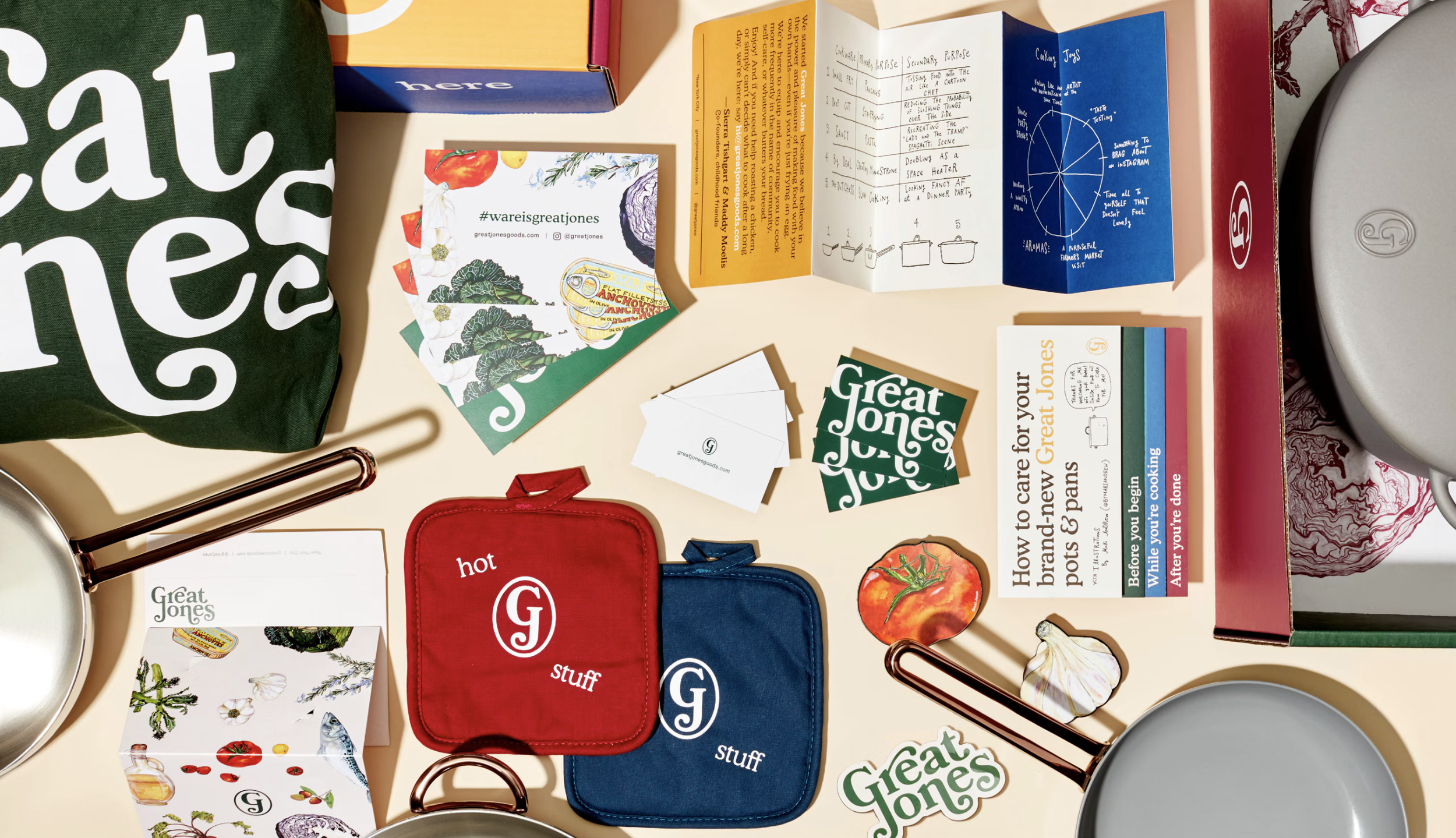
Cookware brand Great Jones is a good example. It launched as a brand-new startup but named itself after a legendary cookbook editor and a historic New York street, so it felt rooted from the start.
Try this: Write down three things your business is connected to that are older than it is. A neighborhood, a family recipe, a trade, a book that changed how you work. Circle the one that makes you light up.
Not sure what your story is? That's exactly where we start. Book a free discover call and we'll find it together.
2. Own one thing completely
You can't afford to be everywhere at once, and you don't need to be. Memorable brands pick one signature element and repeat it so consistently that it becomes theirs.
Think of Tiffany Blue. You recognize the box of Tiffany & Co. before you read a single word. That kind of recognition doesn't come from a huge budget. It comes from discipline.
Your one thing might be a color, a symbol, a pattern or a phrase. What matters is that it shows up the same way, every time, everywhere.
Try this: Pull up your Instagram, your business card and your website side by side. Is the same color or mark on all three? If not, pick one and commit.
Want a signature that's built to last? My brand identity packages give you a logo, color palette and type system designed to be used consistently from the start. See brand packages.
3. Make your words do the work
Most new owners spend weeks on a logo and five minutes on their words. But your words are half your brand. Your tagline, your About page, your button text and even your email sign-off all tell people who you are.
The brands we love sound like someone. A tote bag that says "Bag Lady" or a shipping box that announces "Your order is here!" sticks far longer than "Thank you for your purchase."
You don't need to be a copywriter. You just need to sound like a person, specifically like you.
Try this: Rewrite two things today: your website's main headline and your "Contact Us" button. Read them out loud. If they sound like any business in your industry, try again until they sound like yours.
Your website should sound like you, not a template. When I design your site, we shape the messaging together so every page feels like you're in the room. Explore website design.
4. Add a wink
Wit isn't the same as jokes. It's a small, smart detail that rewards people for paying attention: a clever double meaning in your logo, a surprise message inside your packaging, a 404 page that makes someone smile.
These details turn customers into insiders. When someone spots the hidden meaning in your logo, they feel like they're in on something, and people love telling friends about things they're in on.
And yes, this works for serious businesses too. A law firm or accounting practice doesn't need to be funny, but a touch of warmth or cleverness makes it feel human, and human is what people trust.
Try this: Find one spot for a small surprise. Your order confirmation email, the back of your business card, your website footer or your out-of-office reply are all great places to start.
5. Zig where your industry zags
Every industry has a look. Wellness brands go beige and minimal. Real estate uses glossy renderings. Consultants use the same blue and the same handshake stock photo. If you follow the look, you blend in.
The fastest way to be remembered is to notice what everyone in your space does and deliberately do something different. When most new cookware brands went quiet and minimal, Great Jones went bright, colorful and full of personality. When most luxury condo marketing relied on computer renderings, some developers stood out simply by showing real photos of real rooms.
Different doesn't mean random. It means choosing on purpose, based on who you are and who you serve.
Try this: Screenshot the homepages of five competitors and put them side by side. What do they all share? A color, a photo style, a phrase? That's your opening.
Every project I take on starts with a competitor audit, so your brand stands apart from the first day it goes live. Let's work together.
6. Build a system, not a pile of graphics
A logo alone isn't a brand. If every new Instagram post, flyer or slide feels like starting from scratch, your brand will drift a little each time until it no longer looks like you.
Strong brands work like a kit. There's an anchor (your logo or signature mark) plus a set of building blocks: secondary colors, a pattern, icons, a photo style and a couple of fonts. Mix and match them and you get endless variety that still looks unmistakably yours.
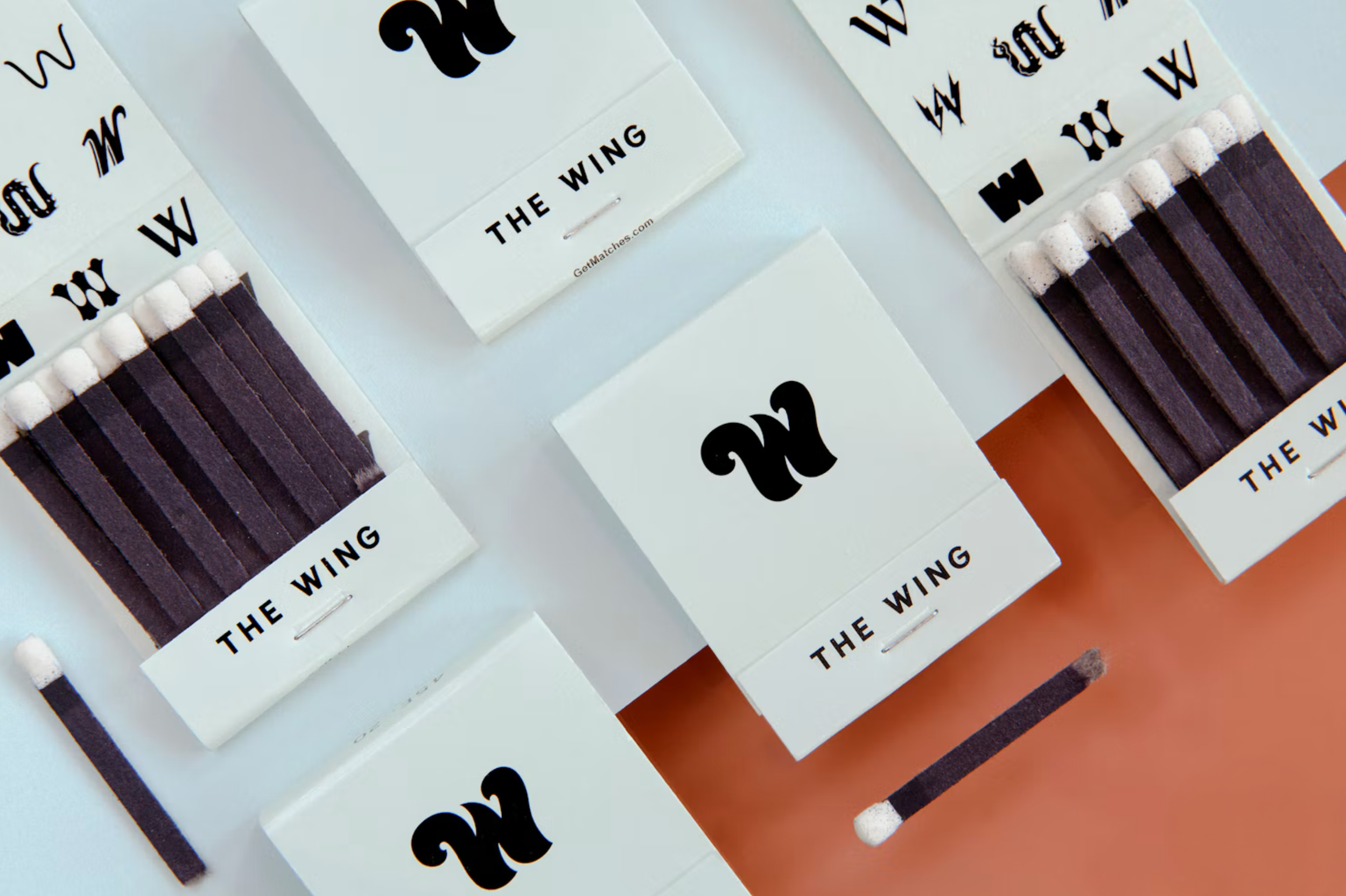
The women's club The Wing did this beautifully. Its logo was a single bold "W," but the brand also used dozens of different W's in different typefaces as patterns and accents, so it stayed fresh without ever losing its identity.
Try this: Give yourself 10 minutes to make a new social graphic. If you can't create something that's clearly yours in that time, you don't need more graphics. You need a system.
7. Brand every touchpoint
Your brand isn't just your logo and website. It's your invoices, your welcome email, your packaging, your email signature, your booking page and your thank-you note. Customers experience all of it, and they notice when one piece feels off.
The brands people rave about treat every moment as part of the brand. Great Jones didn't stop at the pots and pans. It designed the box, the unboxing, the care card, the potholder and even the fridge magnets. The delivery itself became part of the experience.
You don't have to do everything at once. Start with the moments your customers see most often, and make each one feel unmistakably yours.
Try this: List every place a customer encounters your business, from first click to final invoice. Give each one a grade from A to F. Fix your lowest grade first.
This is where a brand and website designed together pay off most. When your identity and your site are built as one system, every touchpoint already fits.
Ready to build a brand people remember? Book a free discovery call and let's talk about what's next for your business.